Geometric Tattoo Designs: Balance, Symmetry, and Meaning in Every Line
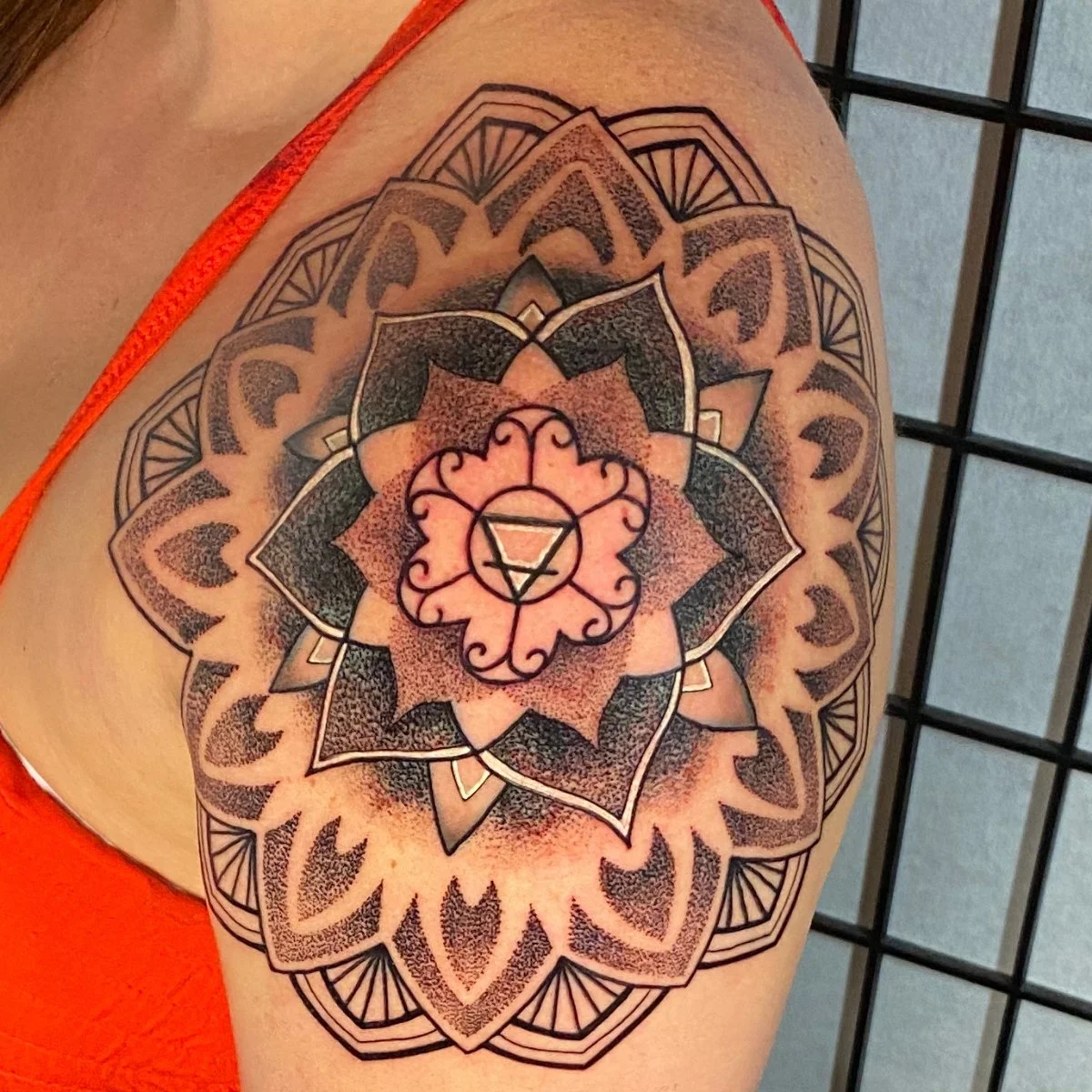
Tattoos have evolved beyond simple decoration. Today, they are expressions of personality, spirituality, and aesthetic preference. Among the many styles gaining popularity, geometric tattoo designs stand out for their balance, symmetry, and meaningful precision. These designs appeal to modern ink enthusiasts who value minimalism, structure, and symbolism. From intricate mandalas to sharp, abstract line work, geometric tattoos offer endless possibilities for both small, subtle pieces and full-body canvases.
For anyone considering a tattoo that is both visually striking and deeply personal, consulting a skilled artist to create a custom tattoo is often the best starting point. Custom designs allow your personal story, body contours, and style preferences to guide the final artwork, ensuring a piece that is both unique and meaningful. Check out our different tattoo styles guide to explore the wide range of approaches, from minimalist to bold realism that can inspire your perfect custom piece.
What Are Geometric Tattoos?

Geometric tattoos use shapes, lines, and patterns to create designs that are visually precise and often symbolically significant. While the style may seem modern, its roots go deep into ancient symbolism and sacred geometry. Circles, triangles, squares, and polygons are arranged to reflect harmony, balance, and interconnectedness, often representing concepts like spirituality, growth, or the natural order of the universe.
Unlike more traditional tattoos, geometric designs rely heavily on symmetry and proportion. Every line, angle, and shape is carefully considered to create a visually pleasing and balanced composition. These tattoos often combine technical precision with artistic creativity, making them appealing to both design enthusiasts and spiritually minded clients.
A Brief History and Meaning Behind Geometric Tattoos
The origins of geometric tattooing are deeply tied to sacred geometry, a concept that has fascinated artists, architects, and philosophers for centuries. Sacred geometry refers to the patterns and proportions found in nature and the universe, from the spiral of a shell to the hexagonal symmetry of honeycombs. Ancient cultures, including the Egyptians, Greeks, and indigenous peoples, incorporated these principles into art, architecture, and ritual symbolism.
In tattooing, geometric designs carry these traditions into a modern context. Triangles may represent stability and connection, mandalas can symbolize balance and the universe, and intersecting lines may convey interconnectedness or personal growth. Many people choose geometric tattoos not only for their aesthetic appeal but also for their layered, spiritual meaning.
Popular Geometric Tattoo Styles
Geometric tattoos have evolved into several distinct styles, each offering unique visual and symbolic qualities. Understanding these options can help you decide what resonates most with your personal story.
Minimalist Geometric Tattoos
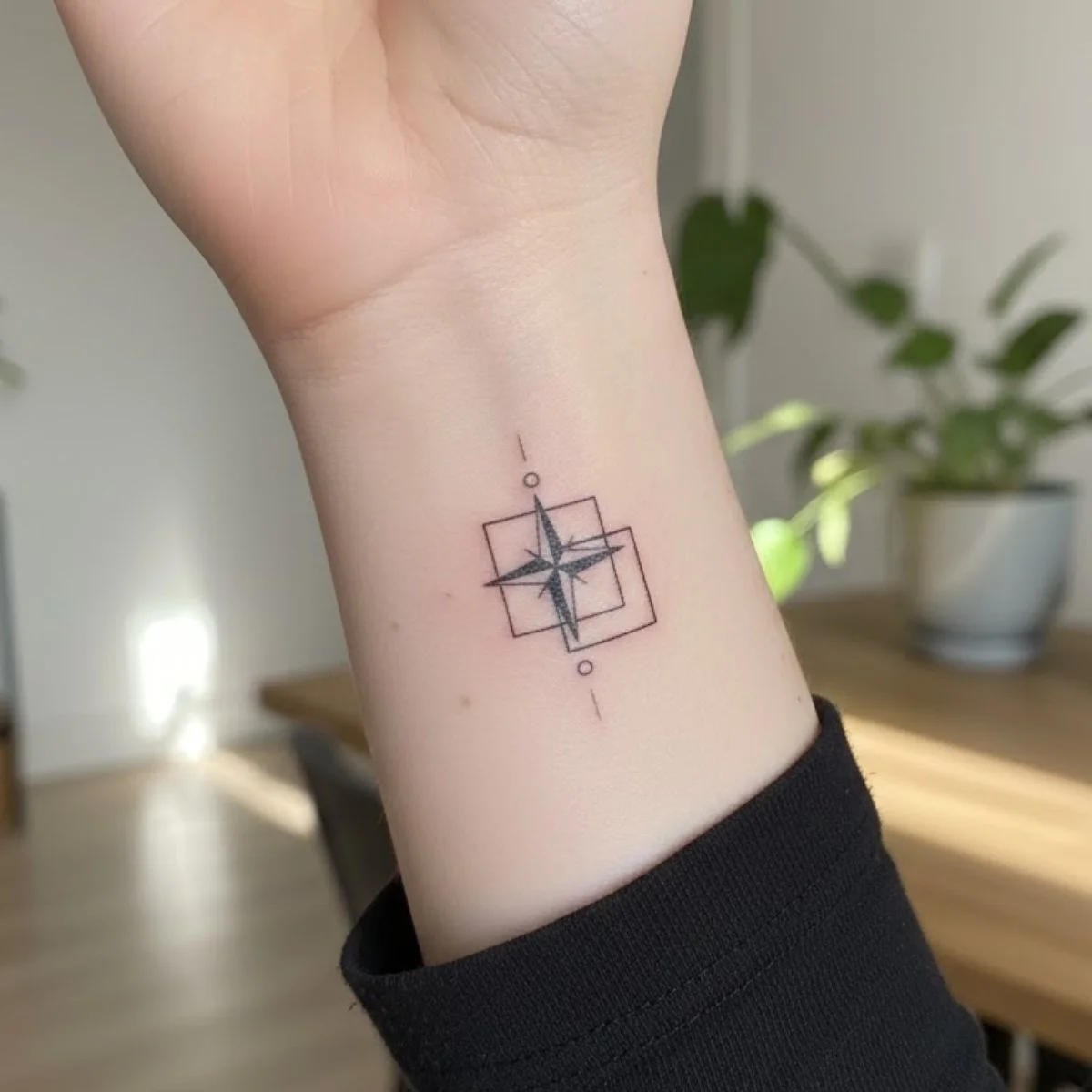
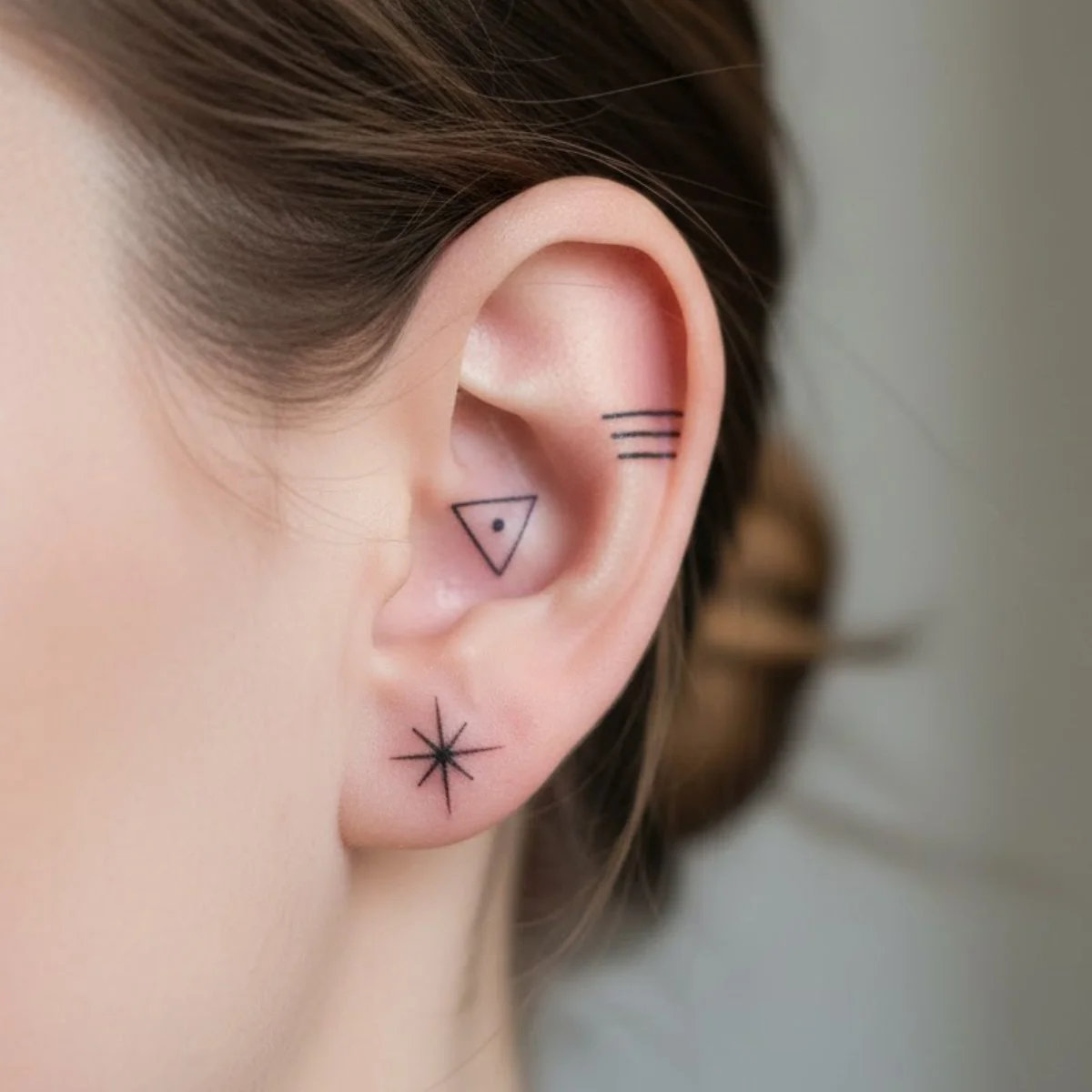
Minimalist geometric tattoos often feature simple, clean lines and small shapes. These tattoos are ideal for first-time clients or those who prefer subtle body art. Minimalist designs can include small triangles, line arrangements, or simple abstract patterns. Despite their simplicity, these tattoos can be highly impactful, especially when placed strategically on the wrist, forearm, or behind the ear.
Blackwork Geometric Tattoos
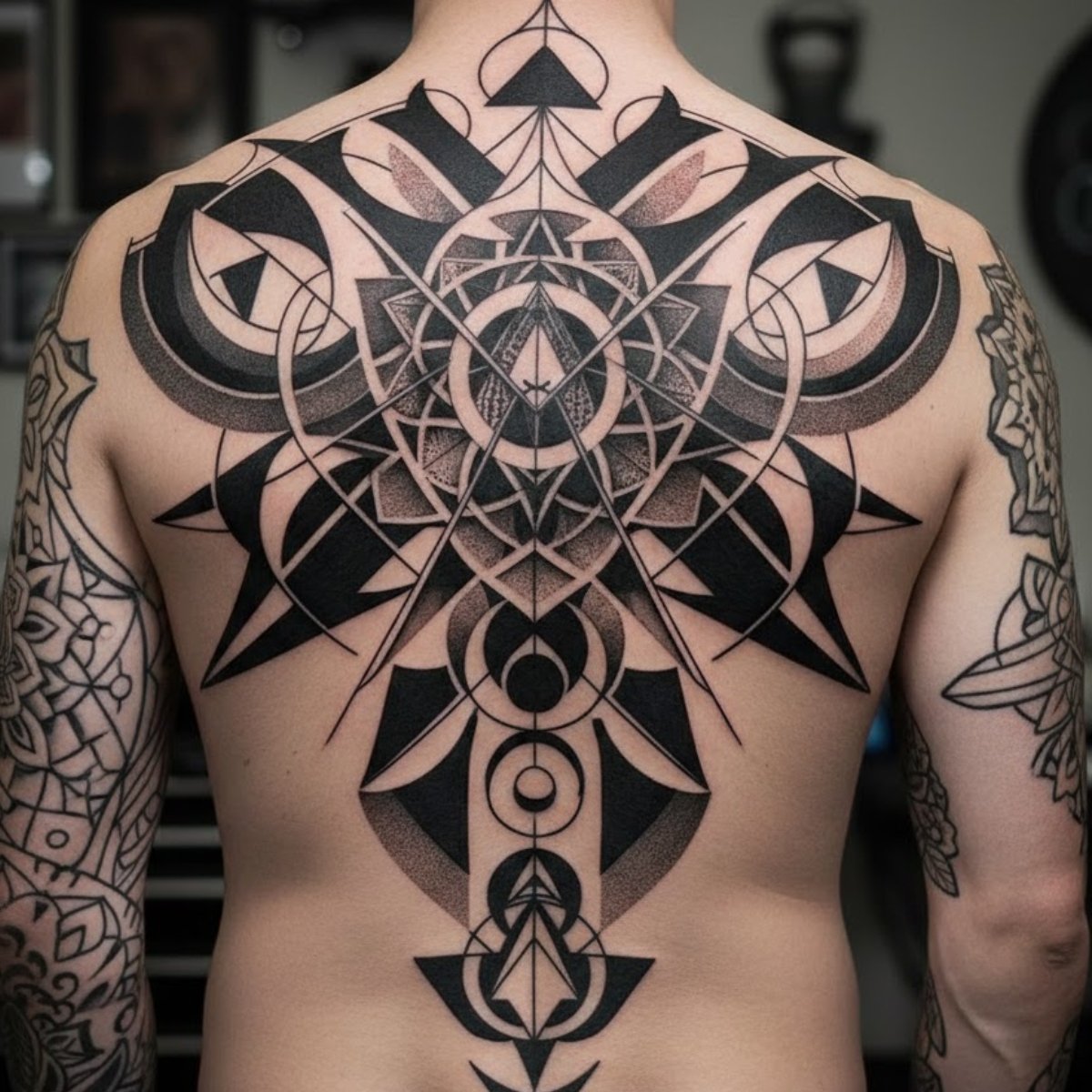
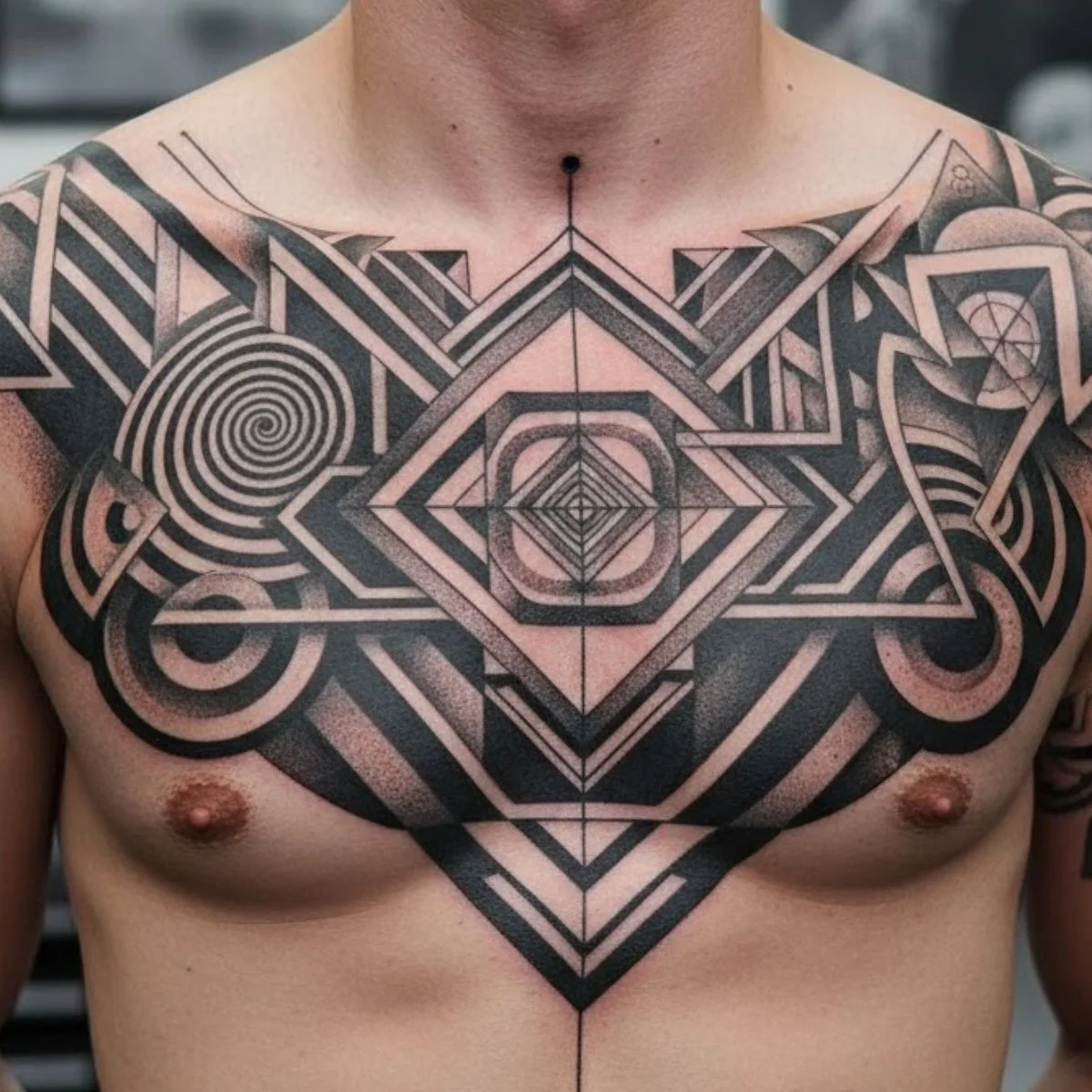
Blackwork tattoos use solid black ink to create bold, high-contrast designs. Geometric blackwork often incorporates heavy shading, intricate patterns, and dramatic shapes that stand out on the skin. This style is perfect for larger tattoos, such as full sleeves or back pieces, and for anyone looking to make a strong visual statement while still maintaining precise geometry.
3D Geometric Tattoos
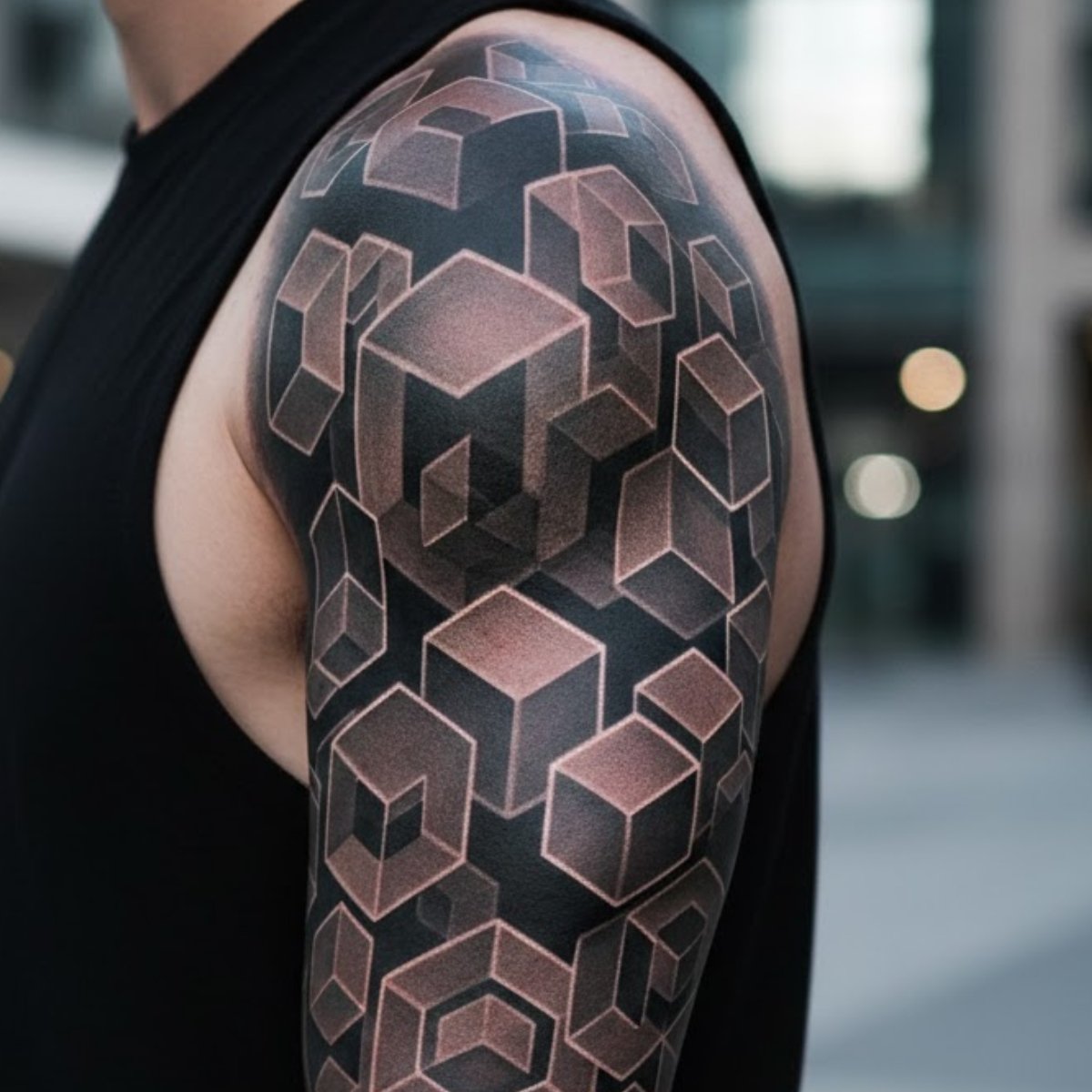
3D geometric tattoos use perspective and shading to create optical illusions, making flat shapes appear dimensional. These designs require a highly skilled artist capable of calculating angles, shadows, and highlights. When done well, 3D geometric tattoos can look like sculpted objects resting on the skin, adding depth and intrigue to traditional line work.
Abstract Geometric Tattoos
Abstract geometric tattoos take the freedom of lines and shapes to create designs that are more interpretive than literal. Artists can combine circles, polygons, and intersecting lines into unique patterns that reflect personal meaning or simply visual appeal. These tattoos often blend modern art influences with traditional geometry principles.
Geometric Nature Tattoos
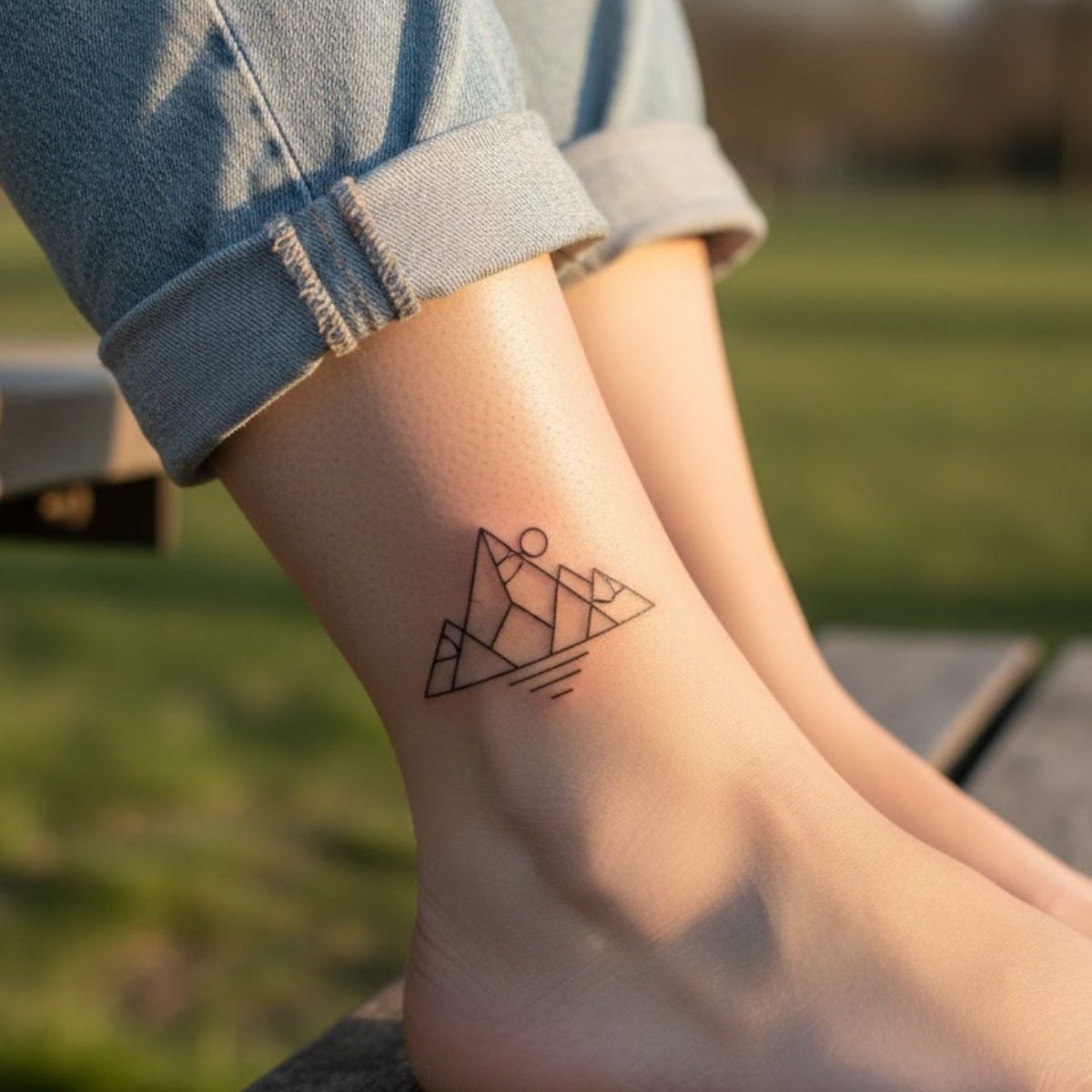
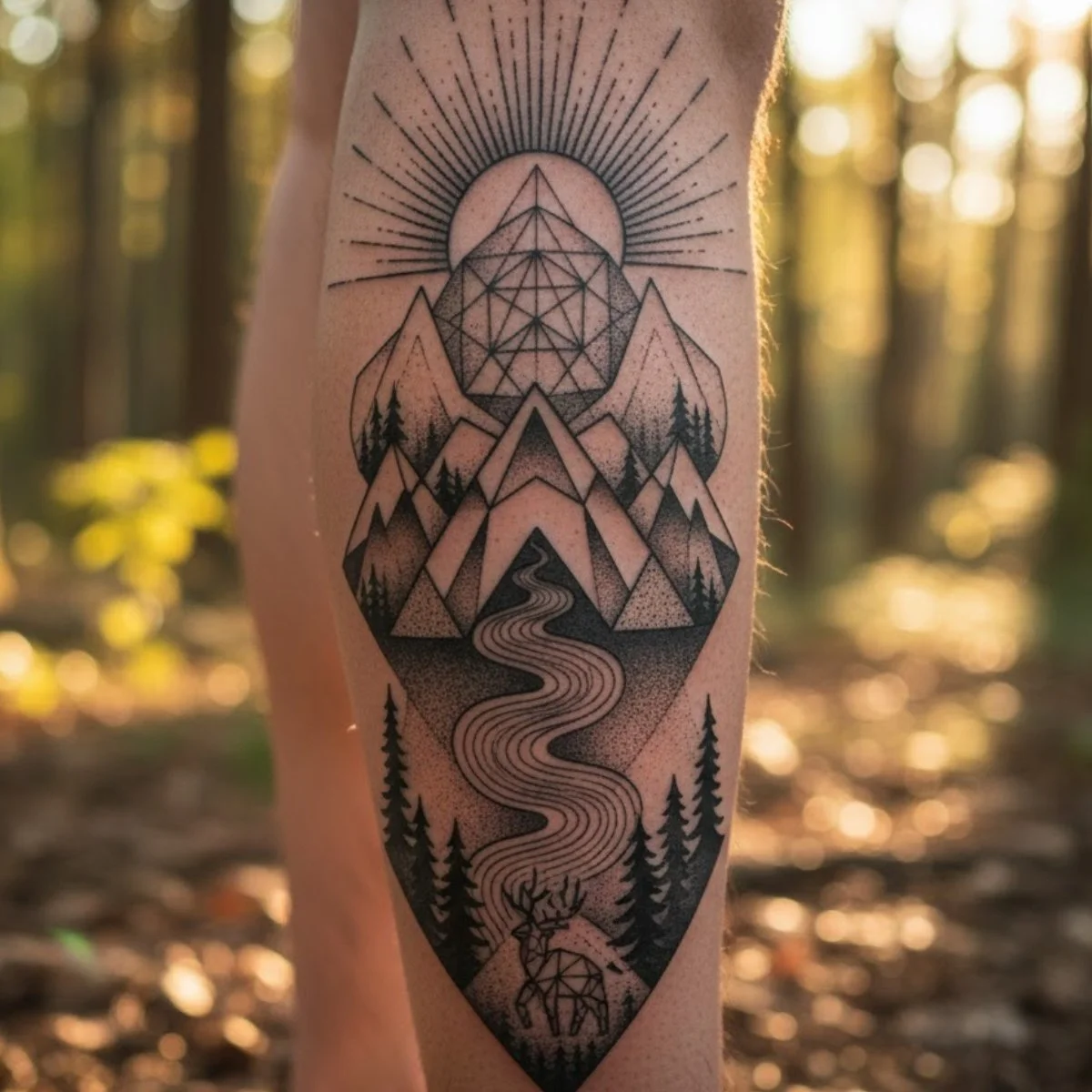
Geometric designs can also merge with natural imagery. Mountains, animals, or trees can be stylized using triangles, lines, or polygonal shapes to create a modern interpretation of nature. These tattoos balance symbolism with aesthetic precision, reflecting both the natural world and contemporary design sensibilities.
Popular Placements for Geometric Tattoos
Placement is crucial in geometric tattooing. Because these designs rely on symmetry and proportionality, their impact is often influenced by where they appear on the body.
Geometric Sleeve Tattoo
Full or half sleeves are ideal for complex geometric tattoos, as they provide enough canvas for intricate patterns and layered shapes. Sleeve designs allow for a combination of motifs, from mandalas to abstract shapes, while maintaining overall symmetry and flow.
Geometric Forearm Tattoo
The forearm is a versatile area for geometric tattoos. It allows visibility without overwhelming the body, making it a popular choice for line-heavy or abstract designs. The forearm also enables artists to play with elongated shapes or repeating patterns that complement the natural contours of the arm.
Geometric Back Tattoo
The back offers a large canvas for expansive geometric pieces. Mandalas, symmetrical patterns, and 3D designs work well in this area. Larger designs can include detailed shading and multiple layers of shapes, creating a striking visual impact while staying true to geometric principles.
Other Placement Ideas
Smaller geometric tattoos work well on the chest, shoulders, wrist, and ankles. Fine line designs can highlight natural curves of the body and blend minimalism with personal symbolism. Regardless of placement, careful consideration of size, spacing, and symmetry is essential for a polished result.
Choosing the Right Geometric Tattoo Design
Selecting a geometric tattoo requires balancing aesthetic preference, personal meaning, and practical considerations. Start by exploring the types of shapes and patterns that resonate with you, whether that’s a mandala for spiritual significance, triangles for connection, or abstract patterns for personal expression.
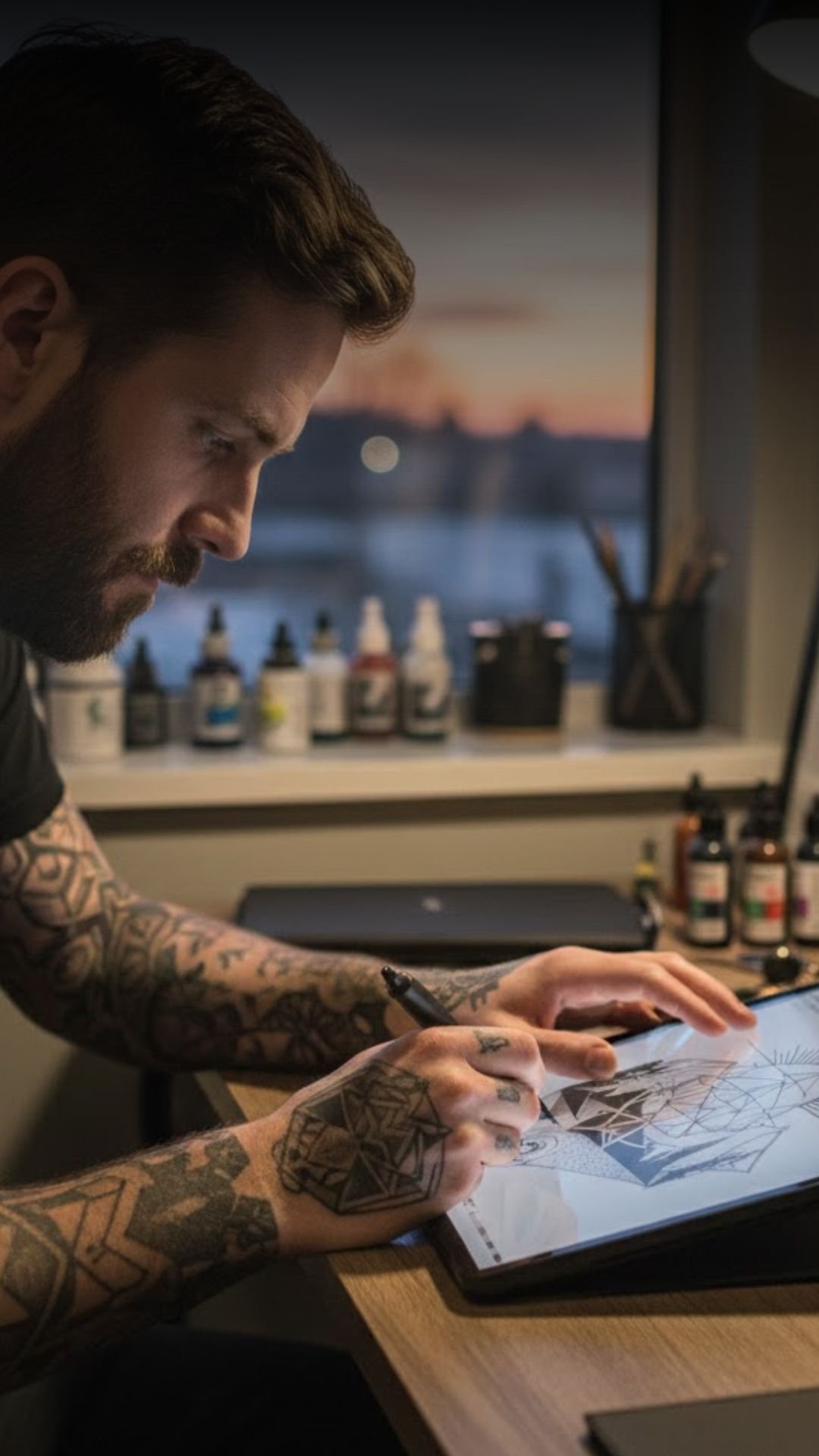
Working with an experienced artist is crucial, especially for complex designs. A skilled tattooist can help refine your ideas into a balanced composition, scale the design to fit your body, and ensure precision in lines and symmetry. For clients seeking something truly unique, creating a custom tattoo ensures that the final design is personal, visually balanced, and meaningful.
In addition, considering the level of detail and placement will influence the tattoo’s longevity. Fine line geometric tattoos are stunning but require careful aftercare and touch-ups over time, while bold blackwork designs can retain sharpness longer.
Understanding Geometric Tattoo Meaning
Geometric tattoos often carry symbolic weight alongside visual appeal. Common motifs include:
Triangles: Stability, connection, change, or balance depending on orientation
Mandalas: Harmony, balance, spiritual awakening, and the universe
Circles and Polygons: Wholeness, infinity, and unity
3D Shapes: Transformation, perception, and personal growth
Many clients choose geometric tattoos not only for aesthetics but also to express personal philosophy, spirituality, or life experiences. The clean lines and symmetry of these designs allow a tattoo to communicate meaning in a visually striking way.
For inspiration and to see how geometric tattoos fit into the broader tattoo landscape, you can explore our different tattoo styles guide. Understanding different styles can help you refine your vision and choose a design that complements your personal aesthetic and story.
Tips for a Successful Geometric Tattoo
Achieving a flawless geometric tattoo requires planning and collaboration with your tattoo artist. Here are some practical tips:
Choose the Right Artist: Geometric tattoos demand precision. Select an artist experienced in line work, symmetry, and pattern design.
Start with a Sketch: Work closely with your artist to finalize a design before the needle touches your skin. Custom sketches ensure proper alignment and proportion.
Consider Body Contours: Geometric designs should flow with the natural lines of your body. Placement and size adjustments can make a big difference in final appearance.
Plan for Healing: Fine line and detailed tattoos require careful aftercare to maintain sharpness. Avoid excessive sun exposure and follow the artist’s instructions.
Be Open to Adjustments: Sometimes shapes or angles need minor tweaks during the process to achieve perfect symmetry.
Following these guidelines maximizes your tattoo’s visual impact while ensuring long-term clarity and satisfaction.
Conclusion
Geometric tattoos are more than just a trend. They combine art, mathematics, and symbolism to create designs that are visually striking and deeply personal. Whether you choose minimalist line work, bold blackwork, intricate mandalas, or 3D designs, geometric tattoos offer a perfect balance of beauty, precision, and meaning.
If you are ready to explore your own design, consider scheduling a consultation to book a tattoo appointment. Working with a skilled artist ensures that your geometric tattoo reflects both your personal story and your aesthetic preferences.
FAQS
-
Geometric tattoos symbolize balance, harmony, and personal growth. Different shapes carry different meanings: triangles may represent stability, circles suggest unity, and mandalas convey spiritual awakening.
-
Yes, geometric tattoos require precision and technical skill. Straight lines, symmetry, and proportional accuracy are essential. An experienced artist ensures clean execution and lasting visual appeal.
-
Consider your body’s natural contours and the complexity of the design. Larger patterns work well on the back, chest, or sleeves, while smaller, minimalist designs suit wrists, ankles, and forearms. Placement affects visibility and overall balance.
Read more…